Electric scooter range dropped by half
Every pack loses some range with age. Losing half of it in a season, or cutting out at 30 or 40 percent, is not age — it is usually one weak cell group pulling the whole pack down.
Updated 2026-10-10
1. Rule out the easy causes
- Tire pressure. Soft pneumatic tires can cost a noticeable share of range. Pump them to the pressure printed on the tire sidewall.
- Riding mode and speed. Dual-motor mode and top speed burn energy fast. Compare range on the same route, same mode.
- Cold. Lithium cells deliver less when cold. A cold-morning ride is not a fair test.
- A dragging brake. Lift the wheel and spin it. It should turn freely.
2. Watch how it drops
A healthy pack loses its last bars gradually. A pack with a weak cell group shows a different pattern:
- the display falls from half to almost empty in a few minutes, or jumps around under throttle;
- the scooter cuts out on a hill or a hard start, then turns on again after a rest;
- it shows full after charging, but the first hard acceleration knocks off several bars.
Those point to the battery, not the riding.
3. How old is the pack?
Most scooter packs keep useful capacity for several hundred full charge cycles. A scooter that has done thousands of miles may simply have worn cells — still a rebuild, not a new scooter.
When it is a bench job
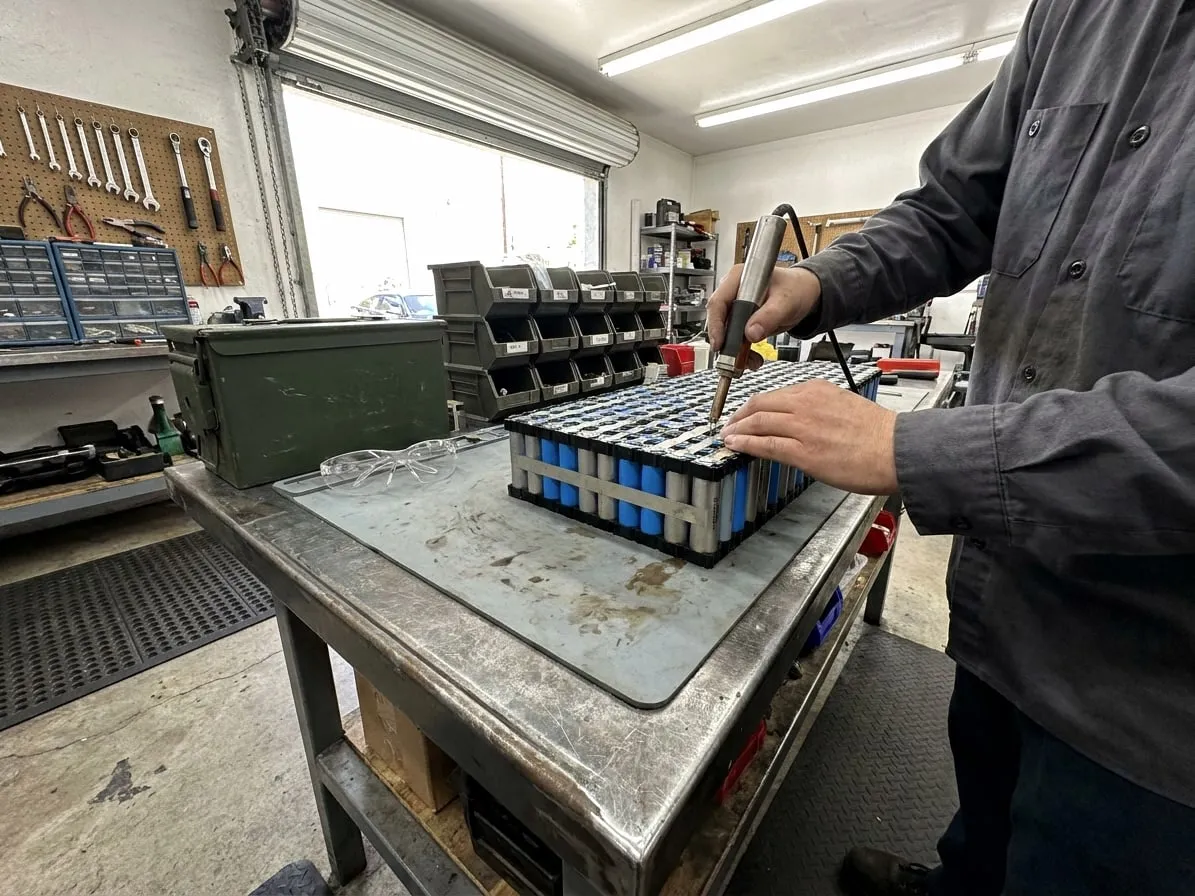
A battery test measures every cell group at rest and under load. If one or two groups are weak, the fix may be a targeted repair; if most of the pack is worn, a rebuild on new cells brings back the original range.
Tried all of that?
Then the fault is inside the scooter. We pick it up anywhere in Southern California, find the fault and quote it before any work — about a week from pickup to return.